Luxury, reads on dark or textured walls
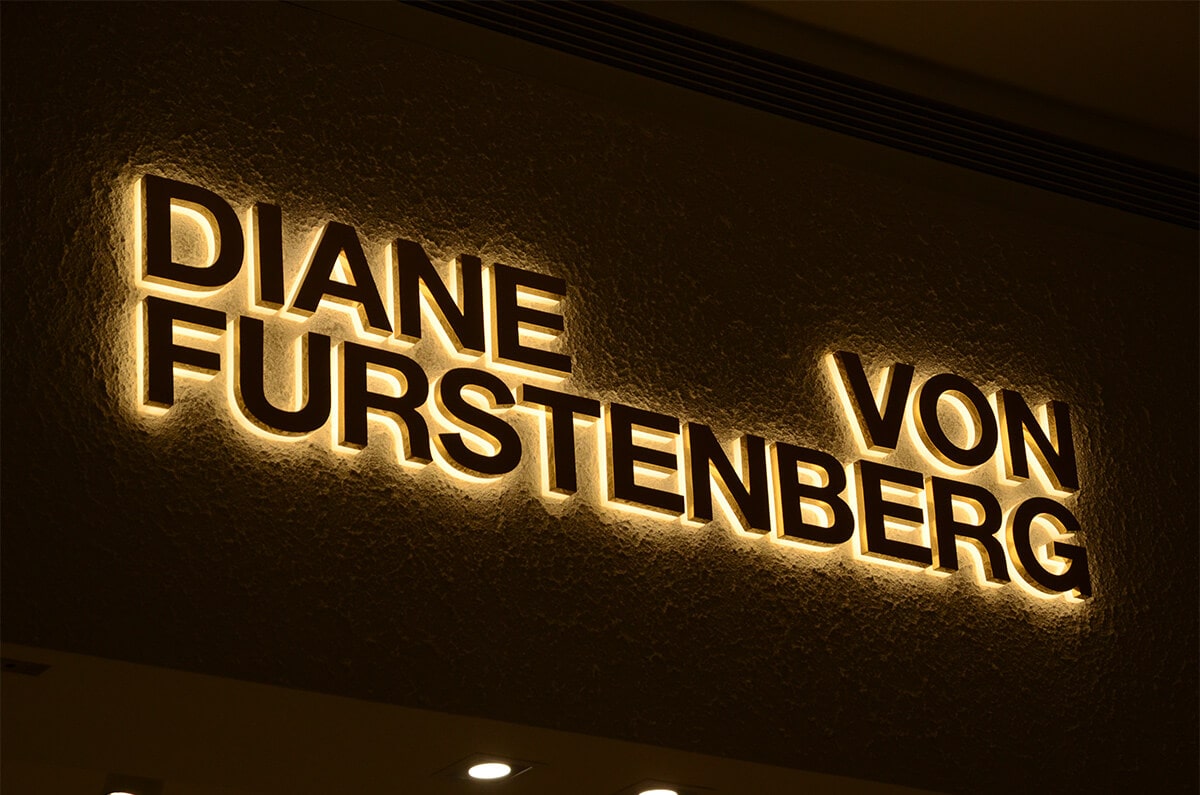
A bright, flush metal route that reads well even on dark or textured walls, since light reaches the eye directly from the visible light-transmitting acrylic edge. Indoor or out.
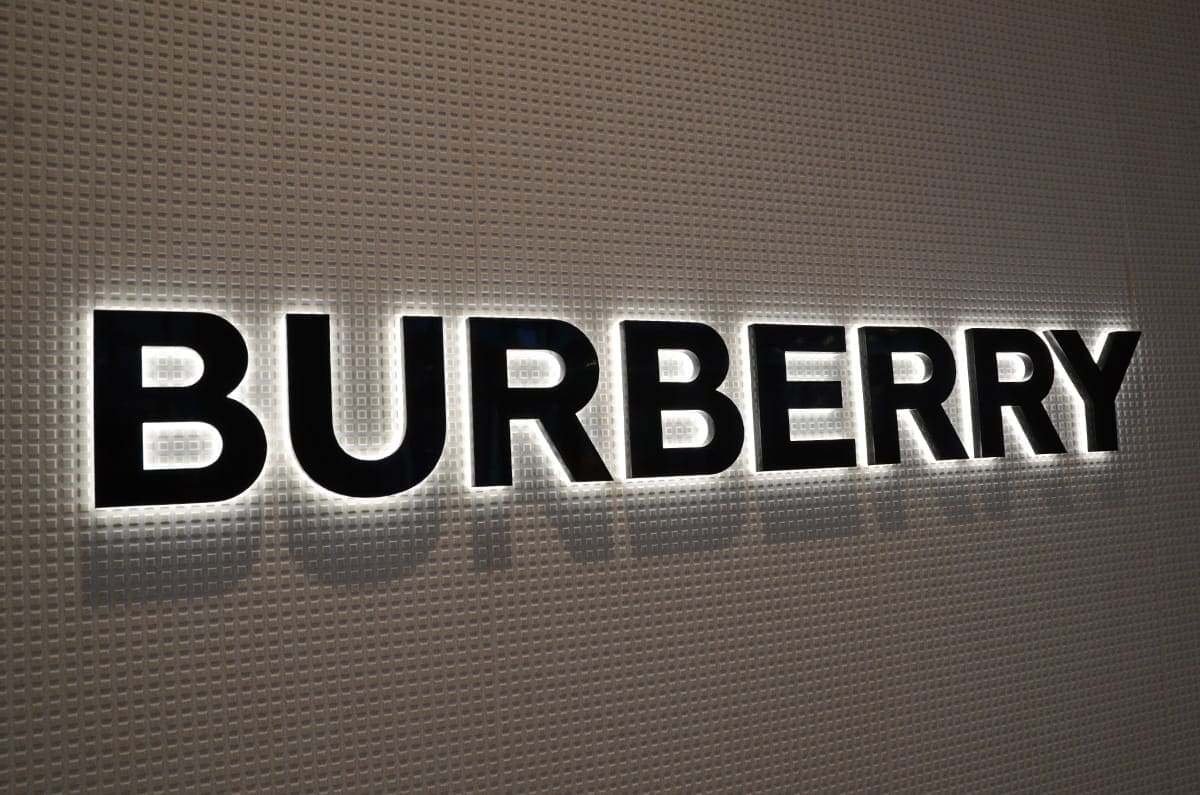
CUSTOM BACKLIT WALL LETTERS MANUFACTURER
Custom backlit letters for a wall mount cleanly on most solid surfaces, with the cable path and fixings planned around what the wall can take. Choose Luxury, Classic, or acrylic, each running safe 12V DC LED on a UL Listed Mean Well power supply. The finished sign is UL Listed and built to U.S. electrical code, with a 3-year warranty.
Get a Free QuoteBacklit letters for a wall mount on most solid surfaces and light the wall behind them as a halo. The key isn’t the letters so much as the wall, what it can hold, how the cable runs, and how much drilling is allowed. Most surfaces work with a standard stud-bolt mount and a hidden cable path. Where that’s hard, a backing plate or a suspended mount solves it, and the route then follows whether the wall is indoor or outdoor.
The wall sets the mounting method. Use this as a quick guide.
For exterior walls, choose a metal route. For interior walls, any of the three works, and on a dark or textured wall, Luxury or acrylic read more reliably than Classic’s reflected glow.
A bright, flush metal route that reads well even on dark or textured walls, since light reaches the eye directly from the visible light-transmitting acrylic edge. Indoor or out.
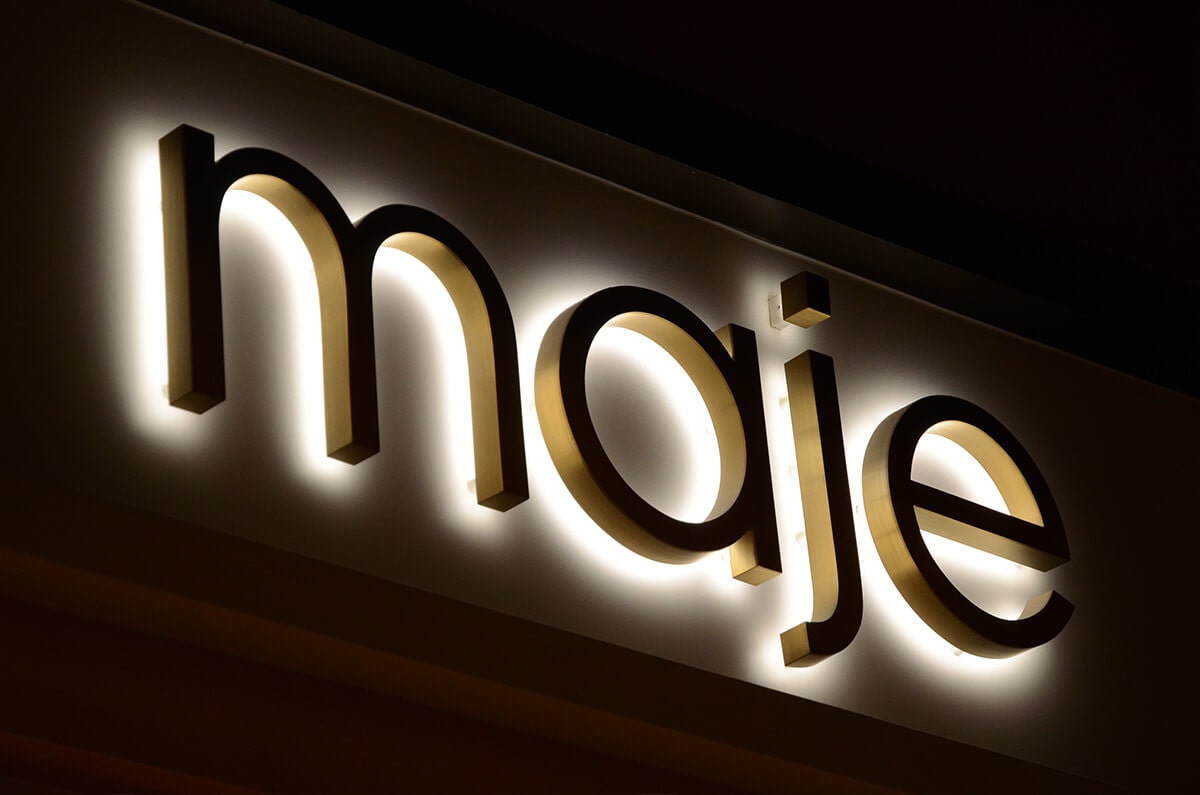
A metal route that mounts off the wall for a smooth reflected halo, best on lighter, more reflective walls and good at larger sizes.
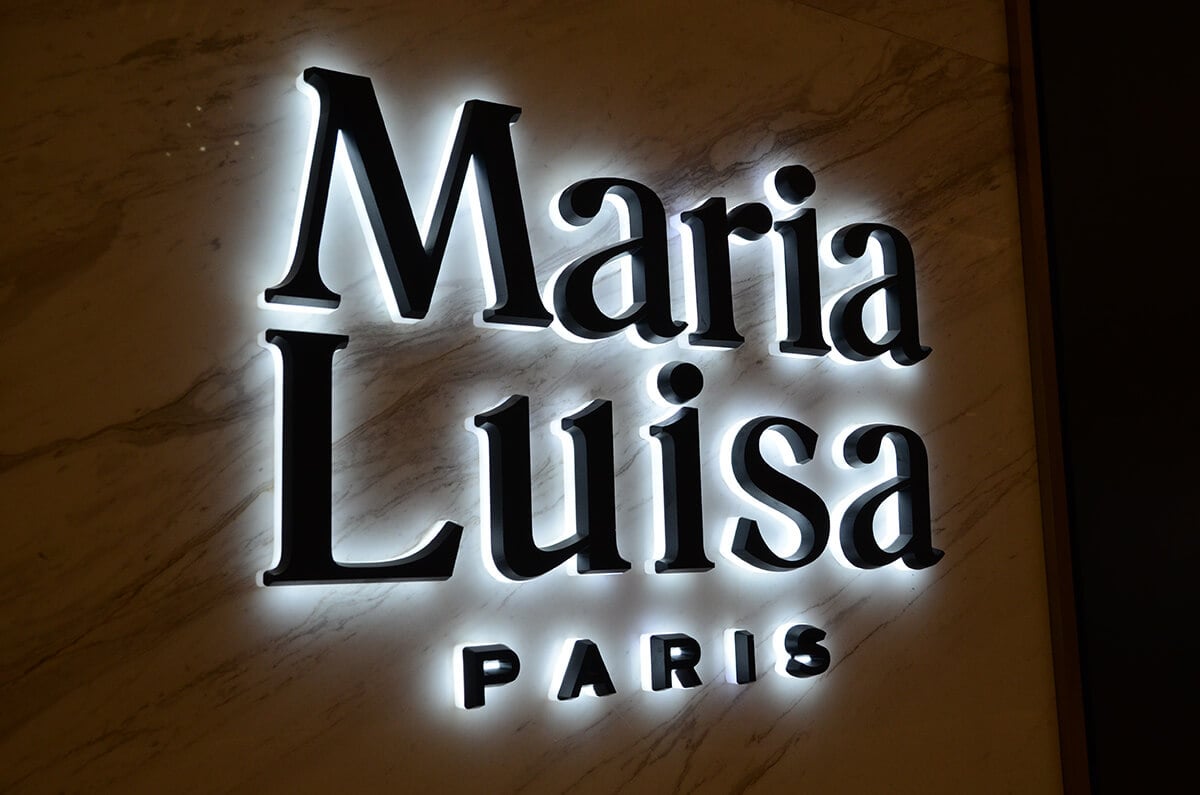
Lightweight for interior walls, easy on fragile surfaces and simple to suspend. The painted face doesn’t light up and the halo washes the wall from the hidden edges. Indoor or covered only.
Every set of wall letters is custom-built to your font, finish, and color, not pulled from a catalog. Where running cable through the wall is hard, we pre-mount the letters on a backing plate so the sign installs as one piece with a single cable hole, or suspend it with no wall holes at all. The sign runs on safe 12V DC LED through one or more UL Listed Mean Well power supplies sized to the piece, never wired straight to 110V or 240V line power, and it ships factory-direct with a 1:1 mounting template, stud bolts, wiring, and instructions. It’s UL Listed and built to U.S. electrical code, the letters carry a 3-year warranty, and the Mean Well power supply carries its own 1-year manufacturer warranty.
We quote in one business day. Once you approve the production-ready shop drawings, the letters usually run about 15 business days, plus roughly a week for DHL, so figure around 25 days in all, with larger or more complex work quoted to suit. We build from your wording, font, and logo. We don’t invent a brand for you.
A few details let us confirm the mounting and quote it:
Not sure the wall can take it? Send a wall photo and the surface type, and we’ll confirm the mounting method and route, then quote it in one business day.
Our backlit letters split into three routes by material and construction. Here's how each one is built, how it lights, and where it fits best.
A side-by-side look at how Classic, Luxury, and acrylic compare on brightness, halo, dimensional effect, installation, size, materials, and lighting, so you can match the route to your project.
Questions specific to wall mounting. General questions on lighting, warranty, and ordering are answered in the main FAQ above.

We searched for months and found a great supplier through Google. The communication was efficient, the sign quality was excellent, and the halo effect looked even better than expected after installation.Alex Haff Retail Project Manager

The team was patient with drawings, revisions, and shipping coordination. The custom backlit letters arrived safely packed and matched our approved design very closely.Christina Buckley Brand Consultant